Buy Steam Skins and Items



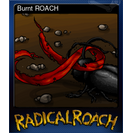

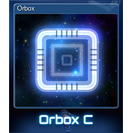


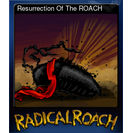
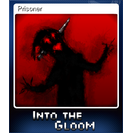























How the Steam trading card economy works
Steam trading cards sit oddly among the things traded on this site. They are not weapon skins, they change nothing in any game, and individually most are worth a few cents. What gives them a market is what they add up to.
Cards drop while you play a participating game. Crucially, you only ever receive about half a set from playing — Valve caps the drops deliberately. The rest has to come from somewhere else, which is the entire reason a card market exists at all. Complete the set and you can craft it into a badge, which is what actually grants profile XP, and with it a Steam level.
Each craft also returns an emoticon, a profile background and a store coupon, and it makes you eligible for booster packs for that game afterwards. Foil cards drop far more rarely and craft into a separate foil badge of their own.
Steam cards reach players through:
- random drops while playing a game that has a card set;
- booster packs, which drop for players who have already crafted the badge;
- trading directly with other players;
- buying on the Steam Community Market or a marketplace such as Mannco.store.
What drives the price of a Steam trading card
- Foil or normal
- the single biggest factor. Foils drop at a small fraction of the rate of normal cards, and a foil set is correspondingly harder to assemble, so foils trade well above their normal counterparts.
- The game's player count
- cards are minted by people playing. A game with a large active population prints cards continuously and its cards stay cheap; a game nobody plays any more has a fixed, slowly shrinking supply.
- Set size
- a game whose badge needs fifteen cards costs far more to complete than one needing five, and the per-card price reflects how many other cards a buyer still has to find.
- Whether the game is still sold
- delisted games stop producing new cards entirely. Those sets behave like any other discontinued supply: the price only goes one way.
- Which specific card is missing
- set completion is unforgiving. A buyer needing one particular card to finish a badge will pay well over the set's average for exactly that card, which is why prices within a single set are rarely uniform.
Unlike CS2 skins there is no float, no pattern and no wear. Two copies of the same card are identical, so you are pricing the card, never the individual copy.
Buying Steam trading cards on Mannco.store
The market above is built for the thing people actually do with cards: finish sets. Everything listed is in stock and held by our trading bots, so there is no waiting for a seller to come online — you add the cards you are missing to your cart, pay, and withdraw.
That matters more for cards than for anything else on this site. Completing a badge means finding several specific cards at once, and doing that through player-to-player trades means several separate negotiations that each have to succeed. Buying the whole remainder in one checkout is the difference between an afternoon and a minute.
A few things worth knowing before you buy:
- Prices are converted to your local currency automatically, and the price you see at checkout is the price you pay.
- Signing in uses Steam OpenID, so you never enter a Steam password on Mannco.store.
- You can pay directly at checkout with a method available in your country, or top up your Mannco.store balance first and spend from that.
The buying flow, start to finish:
- Sign in through Steam and add your Steam trade link to your profile.
- Browse the Steam market above and add the cards you need to your cart.
- Check out.
- The cards land in your Mannco.store inventory.
- Withdraw them, and accept the trade offer one of our bots sends you.
Once the cards are in your Steam inventory the badge can be crafted from your Steam profile as normal. If you would rather work backwards from a target level, the Steam Level Up calculator prices the sets needed to get there.
Selling Steam trading cards for real money
Selling works the same way in reverse. You deposit the cards you want to sell, set your own price, and the sale completes when a buyer takes them.
The seller fee on Steam trading cards is 20%. That is higher than the 5% charged on TF2, CS2, Rust and Dota 2 items, and the reason is volume: cards are low-value items that move in bulk, and each one still costs the same to hold, list and trade as an item worth a hundred times more.
What you get in exchange is a real payout. Once the balance is in your account you can withdraw it to a bank transfer or PayPal, or spend it on any other market on the site. Steam's own market pays sellers in Steam Wallet funds only, which can be spent on Steam and nowhere else — for anyone selling off years of accumulated card drops, that distinction is the whole point.
A Steam marketplace the community trusts
Third-party trading has a long history of scams, and a marketplace is only worth using if it removes that risk rather than adding to it. Every trade on Mannco.store goes through our own bots, item ownership transfers before payment settles, and buyers and sellers never have to trust each other directly. Two-factor authentication is available on every account.
Mannco.store also runs full marketplaces for CS2, TF2, Rust and Dota 2, and your balance is shared across all of them — cards sold here can pay for a knife somewhere else.
Our track record is public: you can read what buyers and sellers actually say on Trustpilot, and the Mannco.store Discord is open if you want to ask the community — or our support team — before your first trade.